
Renovating a Golden Visa Property in Portugal: What Absentee Owners Need to Know
By Pascal Niggli · Co-founder of remodel.pt · Last updated September 2026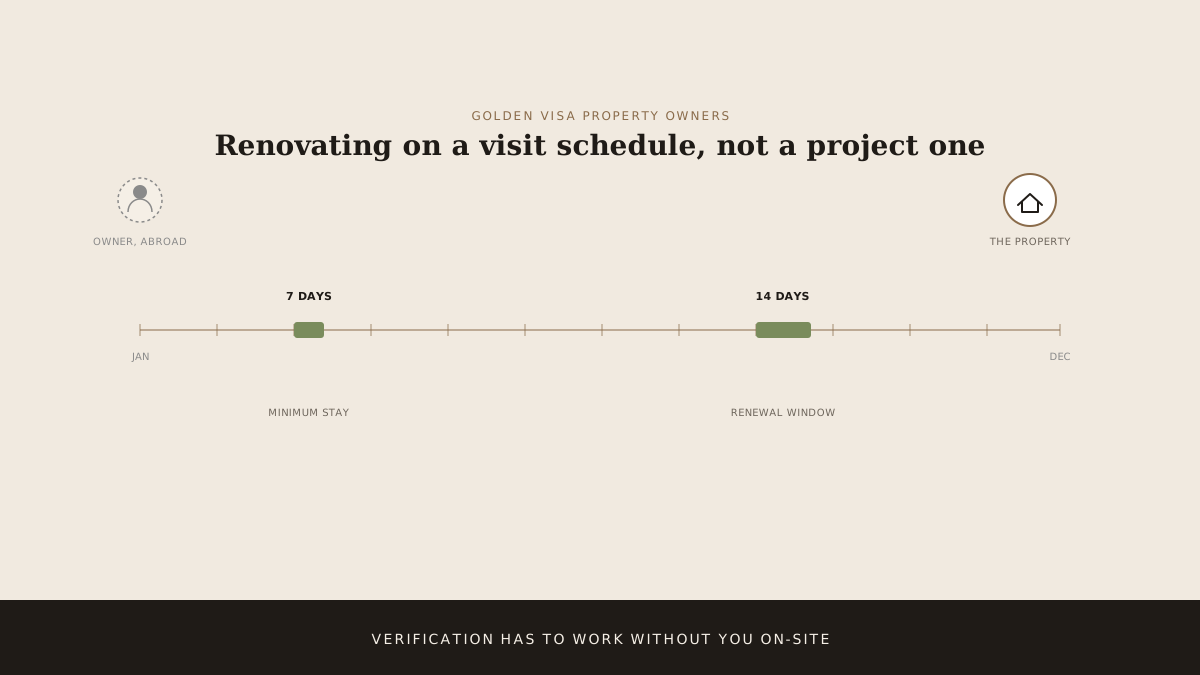
What's in this guide
- Portugal’s real-estate route for new Golden Visa applications closed under Lei 56/2023 in October 2023, this guide is for existing owners, not new applicants
- Golden Visa holders typically visit Portugal as little as 7 days in the first year and 14 days per subsequent two-year period
- A pre-renovation survey (vistoria) costing a small fraction of project value can catch structural and permit issues before they become expensive surprises
- remodel.pt Concierge Services add scheduled site visits and English-language reporting for owners who cannot be present between milestones
- Heritage zone (zona histórica) properties, common among older Golden Visa purchases, can face permit timelines 30–50% longer than standard renovations
Why Do Golden Visa Owners Face a Different Renovation Problem?
That's a structural constraint, not a preference, and it means remote verification isn't a convenience for this group, it's the only realistic option.
Many Golden Visa properties were also bought during the real-estate route's active years (before October 2023) specifically as an investment vehicle, sometimes without the owner ever walking through it in person before purchase. That combination, a property bought for a visa outcome rather than to live in, and an owner who visits on a residency-renewal schedule rather than a renovation schedule, is close to a worst case for the trust and verification gaps this whole guide category exists to address.
Does Renovating Affect Golden Visa Residency Status?
That said, immigration rules in this area have been revised multiple times since 2023, and this guide is not a substitute for advice from an immigration lawyer or your Golden Visa representative on your specific renewal timeline.
Where renovation does intersect with the programme is more practical than legal. If a property needs to be habitable or rentable to satisfy how you're using the investment, delays in permitting or construction can matter to your own plans even if they don't touch the residency permit itself. For condominium buildings, structural renovation also typically needs administrator approval before work can begin, a step that stalls indefinitely when nobody local is pushing it forward, worth flagging early with whoever manages the building.
How Do You Vet a Contractor When You Can't Visit the Property?
See what a construction licence (alvará) actually covers before you sign anything. IMPIC verification and insurance confirmation are exactly the checks that in-person owners often skip because a contractor "seems fine" in a meeting, for an absentee owner there is no in-person meeting to substitute for the paperwork, which if anything makes the process more rigorous by default.
A pre-renovation survey matters more for this owner profile than most, because many Golden Visa properties are older buildings bought sight-unseen or seen only briefly. Structural issues, unauthorised prior construction, or code compliance gaps are far cheaper to find before signing a contract than after work has started, especially in a heritage zone (zona histórica), where additional restrictions can extend permit timelines by 30–50%.
What Does a Typical Renovation Cost and How Long Does It Take?
Kitchen & Bathroom Scope
8–14 weeks. The most common scope for a partial renovation ahead of renting or resale.
Full Property Renovation
16–30 weeks. Scales with size, region, and finish level, budget extra buffer around visit windows.
Cascais, Lisboa, and the Algarve, common regions for Golden Visa purchases, tend to sit at the higher end of national cost ranges given material and labour demand. Timeline matters as much as cost for this owner profile specifically, because a renovation that runs long doesn't just cost more, it can outlast the window during which the owner is actually in the country to make decisions on the spot.
How Does Concierge Oversight Fit an Absentee Owner?
For an owner with a seven-day annual visit, this is close to the only practical way to stay informed without either overpaying for constant travel or losing visibility entirely. The independent inspector's milestone sign-off stays separate from Concierge reporting by design, so the person keeping the owner informed week to week is never the same person certifying the work is actually done to standard.
For a Golden Visa owner specifically, Concierge's role matters most in two recurring stalls: chasing condominium administrator approval, and following up directly with the câmara municipal on permit status rather than waiting on email from abroad. Both are exactly the kind of delay that eats into a renovation timeline when nobody local has the standing or the time to push it forward.
Frequently Asked Questions
Conclusion
A Golden Visa property comes with an ownership pattern, long stretches away, occasional short visits, that makes remote verification the default rather than the exception. The same mechanisms that protect any foreign owner, alvará checks against IMPIC, a pre-renovation survey, staged payments gated by independent inspection, matter even more here because there usually isn't an in-person fallback if something is missed.
Related reading: Managing a renovation from overseas · What is an alvará? · Paying a contractor from abroad · Portuguese renovation & real estate glossary

Pascal is the co-founder of remodel.pt. Originally from Switzerland, he has lived in Portugal for several years and has first-hand experience with the permit, VAT, and contractor issues property owners run into. He built remodel.pt to be the resource he wished existed when he started.