
What Is an Alvará, and Why Should You Never Hire a Contractor Without One?
By Pascal Niggli · Co-founder of remodel.pt · Last updated July 2026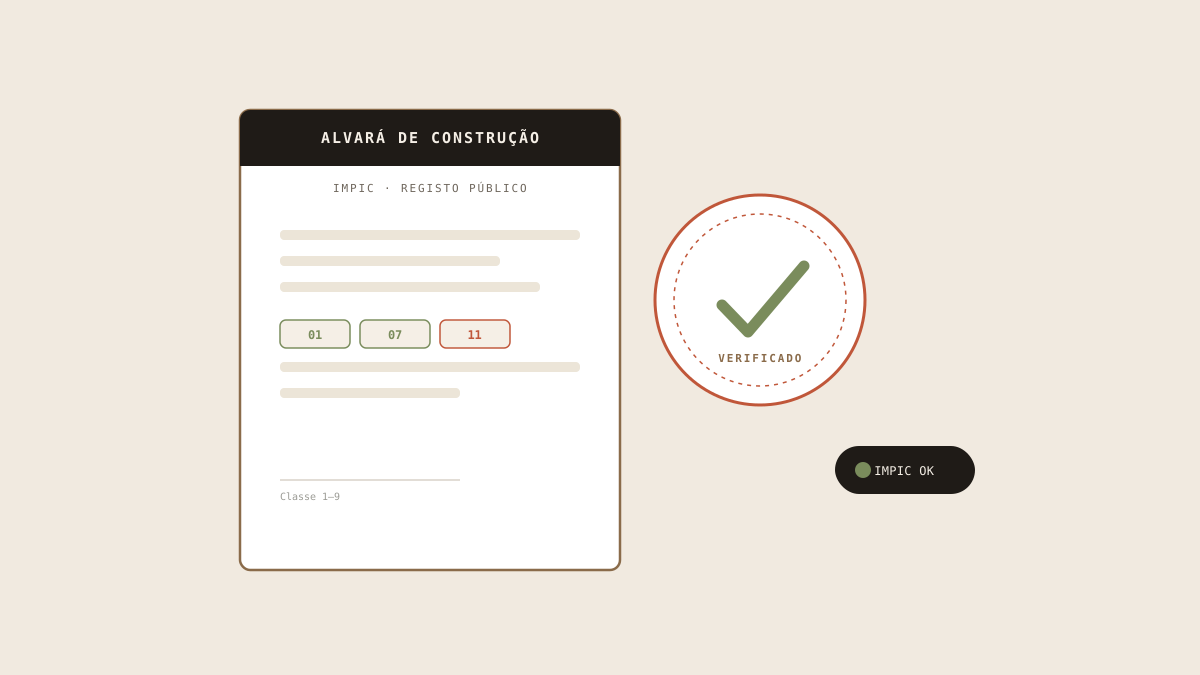
What's in this guide
- An alvará de construção is divided into numbered subcategorias that define which trades a contractor can legally perform
- IMPIC maintains a public register of licensed contractors, searchable online at impic.pt
- Unlicensed renovation work voids most insurance claims and leaves the owner liable for workplace injuries
- Foreign owners are typically quoted 20–40% above local rates, and unlicensed operators account for a disproportionate share of those inflated quotes
- remodel.pt cross-references each contractor’s alvará categories against the specific trades your project requires
The Alvará Gap: Why Foreign Owners Are Most Exposed
The problem is structural. A Portuguese homeowner can phone IMPIC, read the register, ask neighbours for references, and visit a contractor's previous sites within the same week. A foreign owner renovating a property in Cascais, Lisboa, or the Algarve from London, Amsterdam, or New York cannot do any of that. They rely on recommendations from estate agents (who are not construction professionals), Google results (which favour marketing budgets over credentials), or word of mouth from other expats (which spreads both good and bad contractors with equal enthusiasm).
This information asymmetry is profitable for unlicensed operators. Foreign owners do not know what an alvará looks like, which categories their project requires, or where to check one. The result: foreign owners are quoted 20–40% above local market rates, and a significant share of those inflated quotes come from contractors who lack the credentials to perform the work legally.
What Does a Construction Licence (Alvará) Cover?
| Subcategoria | Portuguese name | Scope |
|---|---|---|
| 1 | Edifícios de construção tradicional | Traditional building construction, including structural work on residential properties |
| 2 | Edifícios com estrutura metálica | Steel-framed construction |
| 4 | Instalações eléctricas | Electrical installations |
| 5 | Instalações mecânicas | Mechanical installations, including plumbing and HVAC |
| 7 | Reabilitação de edifícios | Building rehabilitation, the category most relevant to renovation of older Portuguese properties |
| 9 | Carpintarias | Carpentry work |
| 11 | Acabamentos | Finishing works, including tiling, painting, plastering, and azulejo installation |
A contractor licensed for subcategoria 11 (finishing works) cannot legally perform subcategoria 1 (structural construction) or subcategoria 4 (electrical installations). If a renovation involves knocking down walls, rewiring, and replumbing, the contractor needs multiple subcategorias on their alvará, or the project needs multiple licensed contractors.
How Do You Verify a Contractor's Alvará?
- 1.Ask the contractor for their alvará number and a copy of the licence document
- 2.Go to the IMPIC website and navigate to "Alvarás de empreiteiro de obras particulares"
- 3.Enter the alvará number or the contractor’s company NIF
- 4.Check three things: the licence is active and not expired, the subcategorias match the trades your project requires, and the classe for each relevant subcategoria covers your project’s estimated value
The process takes about ten minutes if you read Portuguese. If you do not, you are navigating a government database with no English interface, interpreting legal classifications in a language you may not speak, and making a high-stakes decision about a contractor you may never meet in person.
What Happens If You Hire a Contractor Without One?
Most property and construction-specific policies (seguro de obra) require that all contractors hold valid IMPIC credentials. If an unlicensed contractor causes water damage, structural failure, or fire, the insurer can reject the claim.
Under Portuguese labour law, if an unlicensed worker is injured on your property, the owner can be held co-responsible. Licensed contractors carry mandatory workers’ compensation insurance (seguro de acidentes de trabalho).
Structural renovations require câmara municipal approval. If the municipality discovers unlicensed work, the permit can be revoked, and in some cases the câmara can order demolition at the owner’s expense.
Buyers and their lawyers check whether renovation work was performed under valid permits by licensed contractors. Undocumented work flags during due diligence and can reduce the property’s value.
Total exposure from a €50,000 renovation performed by an unlicensed contractor that results in a structural defect, including remediation, legal fees, and lost resale value.
How remodel.pt Verifies Contractors Against IMPIC Records
remodel.pt confirms the contractor's alvará number against the IMPIC public register, verifying the licence is active, the subcategorias cover the trades claimed, and the classe is sufficient for the project values targeted.
When a project is submitted, remodel.pt matches the required trades (structural, electrical, plumbing, finishing) against the subcategorias on each potential contractor’s alvará. A finishing-only contractor is never referred for structural work.
remodel.pt confirms current liability insurance (seguro de responsabilidade civil) and workers’ compensation insurance (seguro de acidentes de trabalho), checked at the point of referral, not once a year.
Frequently Asked Questions
Conclusion
An alvará de construção is not a formality. It is the legal document that determines whether a contractor is authorised to perform the specific work a renovation requires, whether their insurance is valid, and whether the owner is protected if something goes wrong. For foreign property owners renovating in Portugal, verifying an alvará is the single most important step before signing a contract, and the one most frequently skipped.
Related reading: Finding a trustworthy contractor · Questions to ask a contractor · Comparing renovation quotes · Avoid these renovation scams

Pascal is the co-founder of remodel.pt. Originally from Switzerland, he has lived in Portugal for several years and has first-hand experience with the permit, VAT, and contractor issues property owners run into. He built remodel.pt to be the resource he wished existed when he started.