
Renovation passport Portugal: what the EPBD means for your property
What is a renovation passport?
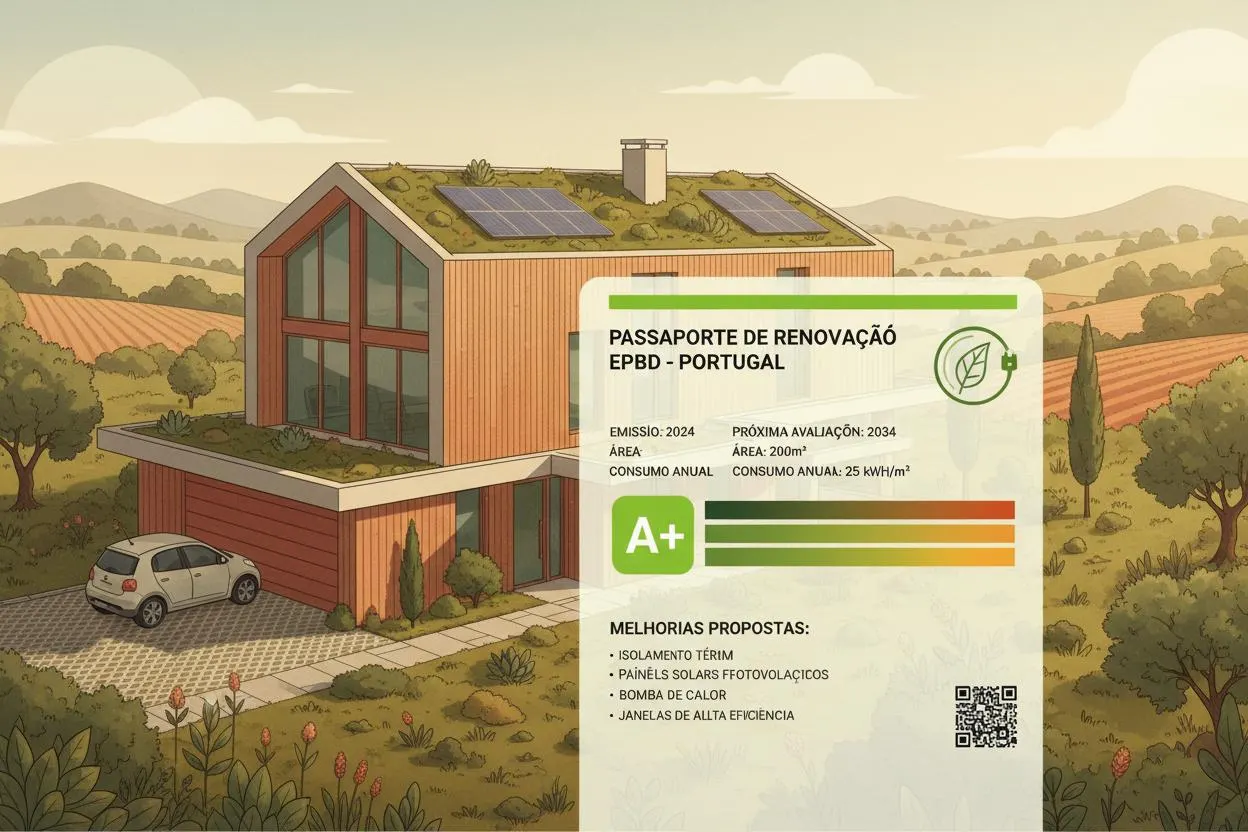
The renovation passport was introduced by EU Directive 2024/1275, the recast Energy Performance of Buildings Directive, and became mandatory in Portugal from 29 May 2026. It is separate from the EPC (Certificado Energético) that already existed in Portugal, the EPC tells you the current rating, the passport tells you the required path to reach compliance.
Think of it as a planning document rather than a demand for immediate action. It specifies what work needs to happen, in what sequence, and to what standard, but the timing of each stage depends on your specific situation, whether you are selling, renting, or triggering a major renovation.
Which properties need a passport?
The passport obligation is triggered in three situations: on sale of the property, on signing a new rental contract, or when starting a major renovation (defined as one that affects more than 25 percent of the building envelope or costs more than 25 percent of the property's market value). Routine maintenance does not trigger the requirement.
Properties that are currently exempt from the EPC requirement remain exempt from the passport: listed heritage buildings, buildings used for less than four months per year, and standalone buildings under 50 square metres.
What does the passport actually contain?
The passport has six required components under the EPBD and the Portuguese SCE regulations:
Full energy audit of the property as it stands, including U-values for walls, roof, and windows, the existing heating and cooling systems, and the annual primary energy consumption in kWh/m².
A sequenced set of renovation measures, typically two to four stages, moving from the current rating toward A or B. Each stage must be logically ordered so later stages build on earlier ones rather than requiring rework.
Estimated cost for each renovation stage based on standardised unit costs. These are the figures that most consistently understate real market prices, see the section on the cost gap below.
Modelled energy rating after each stage is complete, so the property owner can see the interim improvements and when full compliance is achieved.
A list of applicable government incentives, PRR grants, EcoCredito, municipal subsidies, and any available financing products. This section varies significantly by municipality.
The SCE auditor's registration number, the date of issue, and the 15-year validity period. The passport must be registered in the SCE database.
What renovation stages does it require?
The most common renovation path for foreign-owned properties in the Algarve and Lisbon areas runs as follows:
Roof insulation (ETICS or equivalent), external wall insulation where applicable, and thermal bridge correction at structural junctions.
Replacement of single or low-performance double glazing with high-performance double or triple glazing meeting Uw values specified in the passport.
Replacement of gas boiler or direct electric heating with an air-source heat pump. Hot water cylinder with heat pump or solar thermal collector.
Solar photovoltaic system sized to the property's annual consumption, with battery storage where the passport specifies self-consumption optimisation.
Why passport cost estimates are wrong
The main exclusions from passport estimates are: scaffolding and temporary site access structures (often €2,000 to €5,000 for a standalone villa), VAT at 23 percent on materials and labour (6 percent for qualifying ARU rehabilitation work), regional demand premiums in coastal areas, heritage zone surcharges where the câmara requires specific materials or finishes, and structural remediation if envelope work reveals hidden defects.
For buyers negotiating on a property with an outstanding passport: use the market cost figures, not the passport estimates, when calculating the brown discount adjustment. The gap can easily represent €10,000 to €15,000 on a mid-range renovation.
The brown discount: how passports affect sale price
The term brown discount (or brown penalty) comes from commercial real estate and refers to the price reduction buyers demand to account for the environmental and energy upgrade costs embedded in a property. It is now entering residential markets in Portugal as renovation passports make energy obligations explicit and legally binding.
What obligations does the passport create for foreign owners?
For foreign property owners, the passport creates four practical obligations:
The passport must be provided to any buyer or tenant. Failure to disclose is a legal violation under the SCE framework and can be used to challenge the validity of the contract.
The passport must be in place before signing a promissory contract (CPCV) for sale, before signing a new rental contract, or before starting a major renovation. It cannot be commissioned retroactively.
If you sell a property with an unactioned passport, the remaining obligations transfer to the buyer. The passport registers this explicitly. Buyers and their solicitors are now checking passport status as standard due diligence.
Renovation work carried out under a passport must use contractors with the relevant certifications, IMPIC alvará for general construction, DGEG registration for electrical and heat pump installation, and SCE-certified auditors for the post-renovation EPC reassessment.
Frequently asked questions
This guide reflects Portuguese energy performance law as of July 2026, including EPBD Directive 2024/1275/EU and its Portuguese transposition effective 29 May 2026. It is intended as orientation for foreign property owners and is not legal or financial advice. Confirm your specific obligations with a certified SCE energy auditor and a licensed Portuguese solicitor before any transaction or renovation decision.
Pascal is the co-founder of remodel.pt. Originally from Switzerland, he has lived in Portugal for several years and has first-hand experience with permit, VAT, and contractor issues foreign owners run into. He built remodel.pt to be the resource he wished existed when he started.
Last updated: July 2026