
How Milestone Payments and Independent Inspections Work in Portugal
By Pascal Niggli · Co-founder of remodel · Last updated September 2026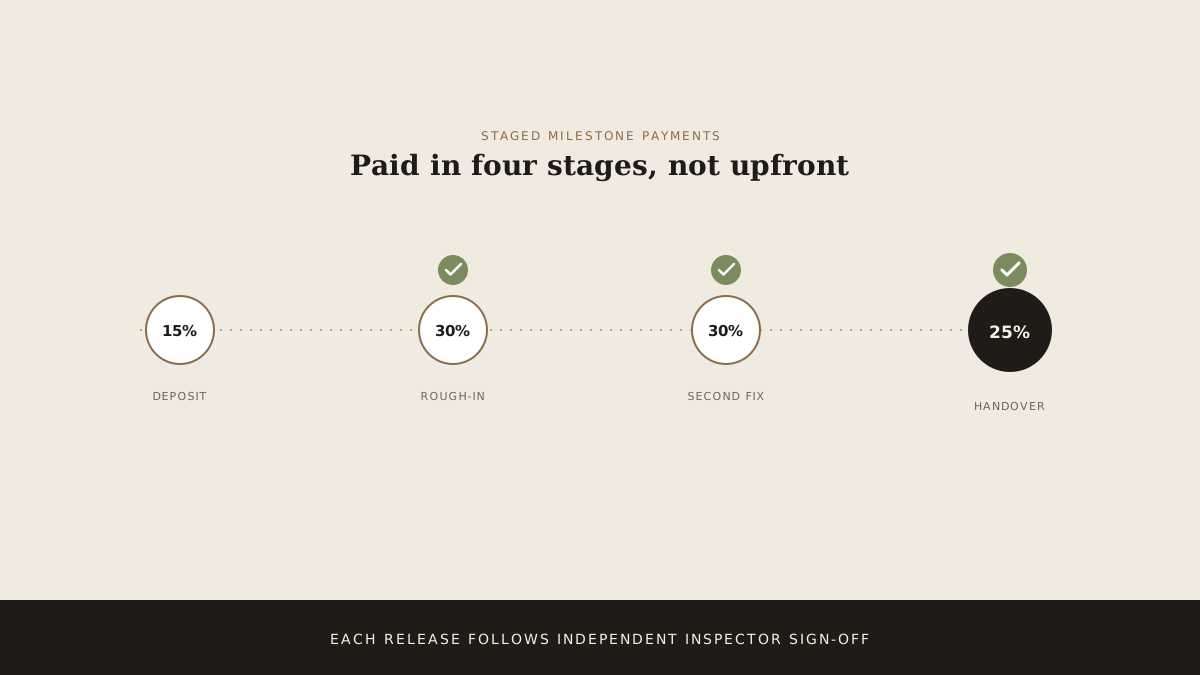
What's in this guide
- A four-stage schedule, deposit, rough-in, second fix, handover, is the standard structure on a remodel project
- Structural and electrical work gets inspected before the next trade closes it behind drywall or tile
- Payment releases only after the independent inspector signs off, not on the contractor’s own claim of progress
- Front-loaded payment terms are the single most common pattern behind stalled and abandoned renovations in Portugal
- Inspection is optional on remodel, and the inspector's fee is confirmed with you before you book it
Why Renovation Payments in Portugal Put Foreign Owners at Risk
This is a distance problem before it's a trust problem. An owner living in Lisboa can drive past a site; an owner in London or Amsterdam is relying entirely on photos the contractor chooses to send. A payment schedule that releases money on the calendar, "half up front, half on completion", rather than on verified progress, hands the contractor control of the one thing that keeps a project moving toward a defined standard: the owner's remaining leverage.
The pattern shows up repeatedly in disputes: a large deposit, slow visible progress, a request for the next payment "to keep materials moving", and a project that stalls once the contractor has been paid for more than they've actually delivered. None of this requires bad faith to happen, cash-flow pressure on a small alvará-holding firm juggling several sites can produce the same outcome as deliberate overreach. Either way, the owner's only real protection is a schedule that ties money to inspected, verified work.
What Is a Staged Milestone Payment Schedule?
The exact split varies by project size and contractor, but a common structure looks like this:
Released at signing, before work begins, secures materials ordering and scheduling.
Structural, electrical, and plumbing work is complete but still visible, before walls close.
Fixtures, tiling, cabinetry, and finishes are installed, before final snagging.
Released only after final inspection and a signed snagging list with no open items.
The deposit is the one stage not gated by inspection, there's nothing yet to inspect, and it covers the contractor's real upfront cost of ordering materials and blocking out the schedule. Every payment after that is different in kind: it's a release against verified work, not an advance against promised work. A kitchen refit priced at €28,000, for example, would move roughly €4,200 at signing, €8,400 at rough-in, €8,400 at second fix, and €7,000 at handover, each of the last three only after sign-off.
What Does an Independent Inspection Actually Check?
The inspector's job at each stage is narrow and specific, not a general walkthrough:
- ✓Work matches the written scope, by trade, not a verbal description of what was done
- ✓Structural and electrical work is checked before the next trade builds over or closes it in
- ✓Materials installed match the tier and brand specified in the quote, not a cheaper substitute
- ✓Code compliance, wiring to RTIEBT standards, waterproofing before tiling, load-bearing changes signed off where required
The rough-in stage matters most for this reason. Once drywall closes over wiring or tile goes down over waterproofing, checking the work underneath means demolition. An inspection that happens before that point can catch a wiring run that doesn't meet RTIEBT standards, or waterproofing that wasn't taken far enough up a wall before tiling, at a cost of a few hours' delay rather than tearing out finished work.
When Do Milestone Inspections Happen During a Project?
In practice that means the inspector visits at rough-in, before drywall or tile closes anything in, again at second fix, once fixtures, cabinetry, and finishes are installed, and a final time at handover, producing a snagging list the contractor has to clear before the last payment releases. A full renovation running 16 to 30 weeks will typically see three site visits from the inspector beyond the initial pre-renovation survey, timed to the schedule rather than to a fixed calendar, since a project that runs ahead or behind still needs each stage checked when it's actually reached.
Timing is the entire value of the mechanism. An inspection scheduled for "week 10" on a project that hit rough-in at week 7 checks nothing useful, three weeks of finish work will already sit on top of whatever's underneath by the time anyone looks.
Warning Signs the Schedule Isn't Being Respected
- ⚠A contractor who asks to be paid the next stage before that stage is finished
- ⚠Pressure to skip the inspection "to keep the schedule on track"
- ⚠A payment schedule with no milestone attached, just calendar dates
- ⚠An inspector proposed by the contractor rather than working independently of them
None of these are unheard of in a legitimate business relationship under real pressure, but each one shifts risk from the contractor back onto the owner, which is exactly the direction the schedule is built to prevent.
How remodel Ties Payment Releases to Inspector Sign-Off
The inspector who produces the pre-renovation condition report is the same one who checks each milestone, so the baseline a contractor is working against and the standard they're checked to are consistent from survey to handover. Because every contractor in the network already holds an alvará verified against IMPIC records before being matched to a project, the inspection step isn't compensating for an unlicensed or unvetted contractor, it's confirming that licensed, vetted work is actually being delivered to scope.
Each of these carries the same four-stage schedule, scaled to project size, with the same independent sign-off at every gate.
Frequently Asked Questions
Conclusion
A renovation payment schedule is worth exactly as much as the inspection behind it. Splitting a project into a deposit plus three staged releases only protects an owner if each release genuinely waits on an independent inspector confirming the previous stage is complete, at the point before the next trade makes it impossible to check. That sequence, not the percentages themselves, is what keeps a foreign owner's leverage intact from signing to handover.
Related reading: What a renovation contract should include · Contractor stopped work? What to do · Comparing renovation quotes · Finding a trustworthy contractor · Avoid these renovation scams · Contractor vetting process · Full renovation cost in Portugal

Pascal is the co-founder of remodel. Originally from Switzerland, he has lived in Portugal for several years and has first-hand experience with the permit, VAT, and contractor issues property owners run into. He built remodel to be the resource he wished existed when he started.