
How Do You Pay a Portuguese Contractor From Abroad?
By Pascal Niggli · Co-founder of remodel.pt · Last updated September 2026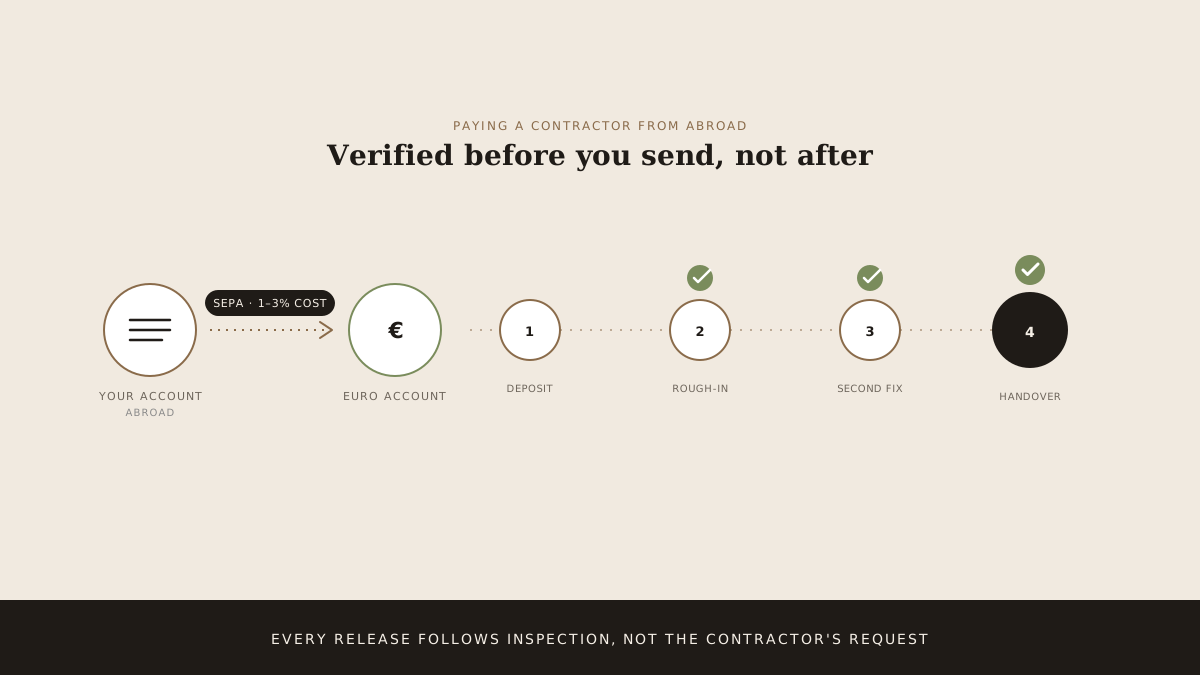
What's in this guide
- Portuguese renovation contracts typically release payment in four stages, deposit, rough-in, second fix, handover, not a single lump sum
- A NIF (número de identificação fiscal) is required before you can hold a Portuguese bank account or be named on a contract at all
- Currency conversion spread on a €40,000 transfer can cost €400–€1,200 more than the mid-market rate, depending on which service you use
- remodel.pt gates the last three payment stages behind an independent inspector’s sign-off, not the contractor’s invoice alone
- Wiring money ahead of verified progress is the single most common way foreign owners lose payment leverage on a Portuguese renovation
Why Does Paying From Abroad Add Risk to a Portuguese Renovation?
Portuguese construction culture assumes someone is watching, a site visit, a phone call answered same-day, a quick look at the wiring before the walls close up. When the person holding the money is a time zone away and reachable only by email, that assumption breaks, and the owner is left deciding whether to trust a description over a fact.
This isn't unique to Portugal, but it compounds two problems foreign owners already face here. Most contractors do not operate in English, so a payment dispute plays out in a second language. And there is no single national standard forcing a written, staged contract in the first place, so the schedule is only as strong as what you negotiate up front. Owners managing a project without ever visiting face a related problem covered in managing a renovation from overseas: verification and payment are two sides of the same distance gap.
What Do You Need in Place Before the First Transfer?
A NIF is Portugal's tax identification number, and it is required to open a Portuguese bank account, to be named as the paying party on a construction contract, and in most cases to be issued a formal invoice (fatura) for work done. Non-residents typically obtain one through a fiscal representative, a step worth completing weeks before a renovation starts, not the week you're ready to send the deposit. Confirming the contractor's own paperwork matters just as much, see what a construction licence (alvará) actually covers before signing anything.
The written scope matters just as much as the NIF. A quote that says "bathroom renovation, €12,000" with no stage-by-stage breakdown gives a contractor total discretion over when to ask for money and how much. A scope that specifies deposit, rough-in, second fix, and handover, each with its own euro amount, is what turns a vague trust relationship into an enforceable schedule.
How Should a Payment Schedule Be Structured When You're Not On-Site?
See exactly how milestone payments and independent inspections work for the full mechanism. On remodel.pt, that inspection is built into the project fee the owner already pays, so there's no separate invoice or negotiation needed to get an independent set of eyes on-site before money moves.
For an owner who cannot personally verify progress, this structure does the verification for them. A deposit funds materials and mobilisation. Rough-in payment releases only after wiring and plumbing behind the walls has been checked, the single most expensive mistake to catch late. Second fix covers fixtures and finishes, and handover releases only once the finished work matches the written scope.
What Do International Transfers Actually Cost?
Traditional Bank Wire
Higher exchange-rate markup, often with a flat transfer fee on top, added by both sending and receiving banks.
SEPA / Transfer Specialist
Wise, Revolut Business, and similar services generally land closer to the mid-market rate with a smaller, disclosed fee.
Two practical points matter more than shopping for the cheapest provider. First, timing: currency markets move day to day, and a payment scheduled two weeks ahead of a milestone gives you room to send when the rate is favourable rather than when the contractor is asking. Second, SEPA transfers (the standard euro-to-euro transfer system across the EU) are usually the cheapest and fastest way to move money once funds are already in a euro account. Converting currency once into a Portuguese or EU euro account, then paying the contractor via SEPA from there, often beats repeated cross-currency transfers straight to the contractor's account.
What Payment Requests Should You Refuse?
Each of these breaks the sequence a staged schedule exists to enforce. Once money moves ahead of confirmed progress, the owner has no remaining leverage to compel the contractor to finish the work or fix a defect, and that leverage is worth more from abroad than it is to an owner who can simply show up.
Frequently Asked Questions
Conclusion
Paying a Portuguese contractor from a distance isn't fundamentally different from paying one next door, the same four-stage structure, the same inspection gates, the same NIF and written-scope requirements apply either way. What changes is that an owner abroad has no informal backup, no ability to walk over and look, if the schedule isn't followed and the verification isn't independent.
Related reading: Milestone payments and independent inspections · What is an alvará? · Managing a renovation from overseas · Portuguese renovation & real estate glossary

Pascal is the co-founder of remodel.pt. Originally from Switzerland, he has lived in Portugal for several years and has first-hand experience with the permit, VAT, and contractor issues property owners run into. He built remodel.pt to be the resource he wished existed when he started.