
Buying a property to renovate in Portugal? What to check before making an offer
By Kellogg Fairbank · Co-founder of remodel · Last updated November 2026
Defects that could change your budget.
The layout you are buying the property for.
Documents, access and anything concealed.
Use those lists to brief the right professionals and build a preliminary budget.
What's in this guide
- Record damp, roof, structural, services and façade concerns with photos before pricing any finish
- A layout change your offer depends on should be verified with an architect before you agree a price
- Ask for the certidão permanente predial and caderneta predial, and have your lawyer check them
- A second visit with a building inspector should end with a written observed, suspected and not-verified summary
- Keep a separate allowance for unresolved risks inside the whole cost of the project
Look for defects that could change your budget
With the seller’s permission, take a wide photo of each room and close-ups of anything that concerns you. Note where each photo was taken. Record areas you could not access, such as the roof space, basement or an outbuilding.
| At the viewing | What to record | Who can investigate |
|---|---|---|
| Damp and mould | Musty smells, peeling paint, staining around windows or ceilings, and damp patches at the base of walls. Ask when the marks appeared and whether they change after rain. | A building inspector or moisture specialist can investigate possible sources and explain which finishes may need removing. |
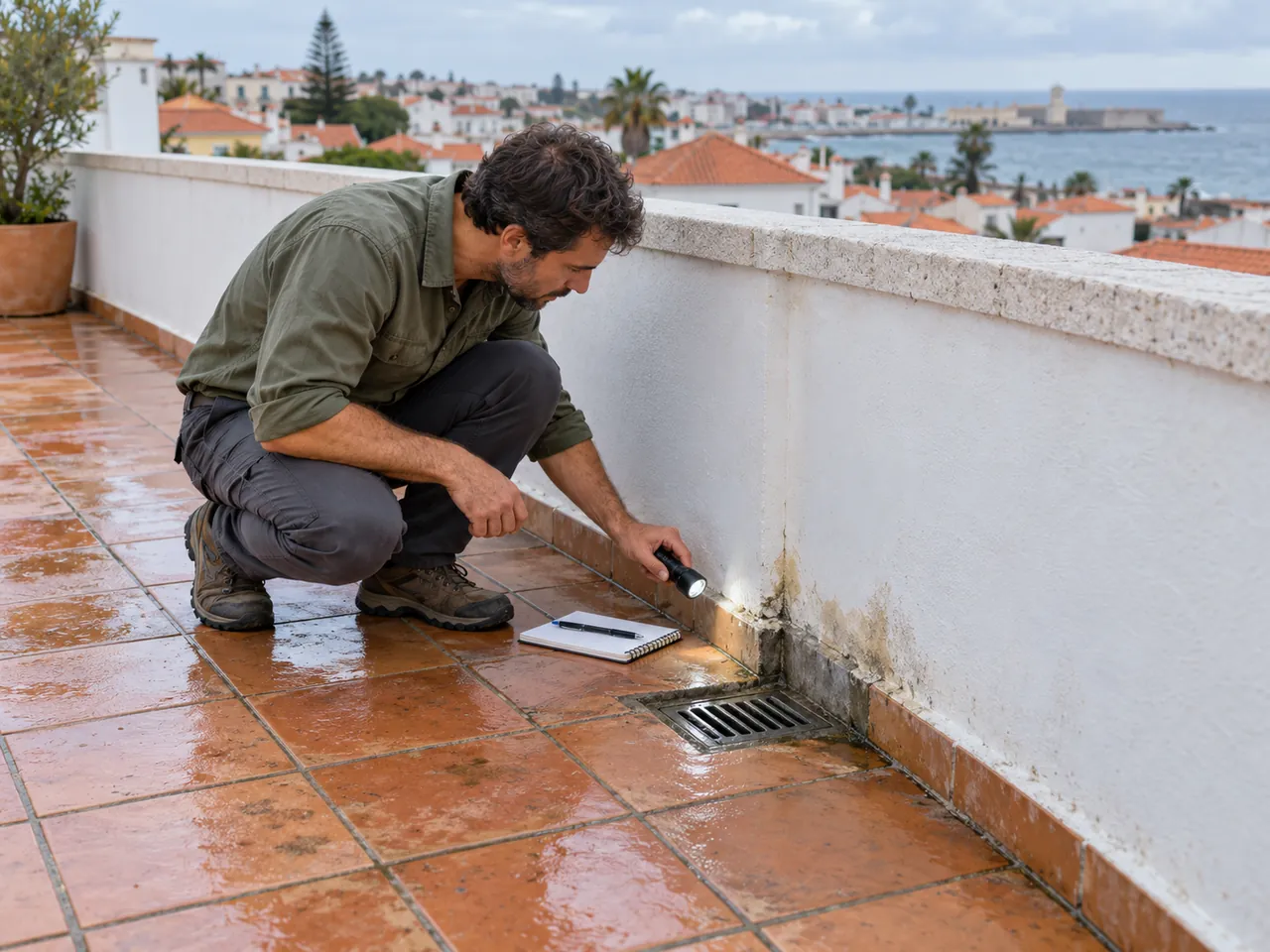
| Roof and drainage | From ground level, look for displaced tiles, uneven rooflines, overflowing gutters or staining below a terrace. Ask about previous leaks and repairs. | A roofer can check coverings, flashings, drainage and accessible areas beneath the tiles. |
| Cracks and uneven floors | Photograph diagonal cracks near openings, cracks visible both inside and outside, and visibly sloping floors. Ask whether there are earlier photos or reports. | A structural engineer can assess suspected movement and advise whether further investigation is needed. |
| Electrical and plumbing | Photograph the electrical board from the outside, visible pipework and the water heater. With permission, ask to run taps and check drainage. Ask when systems were last upgraded. | An electrician and plumber can test accessible systems and advise what may need upgrading or replacing. |
| Windows and exterior walls | Note frames that will not close, staining at sills, damaged shutters and exposed façades. | A building inspector or specialist contractor can assess where repair is feasible and where replacement may be needed. |
Red marks the items most likely to need investigation before they can be priced.
Test the layout you are buying the property for
Mark your proposed changes on a copy of the floor plan or a rough sketch. Separate must-haves from changes you would happily defer.
Ask an architect or structural engineer to assess the wall and identify services that may run through it. An opening can bring structural work, relocation of services and repairs to adjacent floors and ceilings.
Check where the drains, supply pipes and ventilation could run. In an apartment, ask whether the proposal touches shared pipes or other common areas.
Check the recorded use, usable height, daylight and access. Ask an architect what would need to be verified with the municipality (câmara municipal).
Ask an architect to review the existing building and applicable constraints before treating the extra space as part of the deal. Flag any changes to the façade, roof or shared areas early.
Ask for the information missing from the listing
| Ask for | What it helps you check |
|---|---|
| Land registry certificate (certidão permanente predial) and tax property record (caderneta predial) | Have your lawyer check the property description, registered rights and any registered charges, and compare the documents with what is being sold. |
| Municipal plans and relevant records | Compare the documented layout and use with what exists. Ask about an enclosed balcony, converted attic, annex or pool that does not appear on the plans. Have your architect and lawyer clarify any discrepancy and which use documentation applies. |
| Energy certificate, where applicable | Use it to identify reported characteristics and possible improvements to investigate during the visit. |
| Condominium records, if applicable | Ask for recent minutes, known upcoming works and the administrator’s charges declaration. Check whether roof, façade or terrace works are being discussed and how they could affect your budget. |
| Past works records | Ask for invoices, warranties, inspection reports and photos taken during work. These can help a professional decide where further checks are needed. |
Arrange a second visit before relying on a budget
Brief the professional before the visit and ask for a written summary afterwards. It should use these three headings.
What the professional saw and could confirm on the day.
What the evidence points to but has not been confirmed.
What they could not access, test or open up.
- 01Book a second viewing with the right professional
Ask for a second viewing with a building inspector or other appropriate professional. Give them your photos, proposed layout and list of unknowns ahead of time.
- 02Ask for a short written summary
It should separate what they observed, what they suspect and what they could not verify. Get the seller’s permission before any testing or opening-up that requires it.
- 03Bring in an architect or structural engineer early
Do this if the purchase depends on a change to the building.
- 04Request a preliminary budget range
Once the likely scope is clear, ask a contractor for a range based on the visit and a written brief. Ask them to identify what they have assumed about access, materials and the condition of anything concealed.
Work backwards to an offer you can afford
Set out the whole cost of the project, including the purchase, acquisition costs, renovation, professional fees, applicable taxes on works, and any temporary accommodation or financing costs. Keep a separate allowance for unresolved risks and list what could move the budget beyond it.
- 01Purchase price
- 02Acquisition costs
- 03Renovation
- 04Professional fees
- 05Applicable taxes on works
- 06Temporary accommodation or financing costs
- 07Separate allowance for unresolved risks, with a list of what could move the budget beyond it
- =Whole cost of the project
For example, a dated kitchen and a ceiling stain are two different budget items.
You can provisionally price the kitchen from its size and your finish choices.
Get the drainage and waterproofing assessed before relying on a figure for that work.
A single price per square metre hides that difference.
A worked example near Óbidos
You’re considering an older house near Óbidos. Your plan is to keep the existing footprint, open up the kitchen and move in after the renovation. On the second visit, the inspector flags water staining below a roof junction. The architect also needs to establish whether the proposed opening affects a structural wall.
Separate the two issues before you price the project. Ask a roofer to investigate the junction and identify what can be assessed without opening up the roof. Ask the architect and, where needed, a structural engineer to assess the wall. If opening up is required before either issue can be priced reliably, record what remains unknown and who needs access to check it.
Illustrative offer calculation. Suppose your total ceiling is €500,000, you set aside €30,000 for purchase costs and professional fees, and the preliminary works budget is €115,000. Your purchase ceiling is €355,000. If the roof investigation adds €15,000 to the works estimate and you carry a further €10,000 reserve for unresolved scope, the purchase ceiling becomes €330,000. These figures show the calculation. Use project-specific estimates and avoid counting an allowance twice.
If the kitchen opening is essential to your decision to buy, resolve its feasibility before relying on that layout. When the seller will allow further investigation, agree what can be inspected before you commit.
Looking at a property on the Silver Coast? Share the listing, the changes you have in mind and your purchase timeline so we can assess what local support is available. Tell us about the property.
Discuss a property before buying
Send us the listing, the location and the changes you have in mind. If you have already visited, include your photos and the questions you could not answer. We can help you identify what to assess on site and which professionals to involve before you set a renovation budget. Matching covers all of Portugal.
Frequently asked questions
Conclusion
Before you offer, know which problems can be priced now, which need a specialist to find the cause, and which changes the building may not allow. A second visit with the right professional and a written summary turns a hopeful viewing into a budget you can rely on.
If the seller cannot give access or documents, identify exactly what remains unverified and ask your Portuguese property lawyer how to handle it before signing a promissory agreement or paying a deposit. You will know what is happening, who is responsible and what decisions are required.
Related reading: Pre-purchase renovation assessment, How to build a house in Portugal, Do you need a permit to renovate?, Villa renovation cost, Roof repair or replacement

Kellogg is a former payments executive turned entrepreneur, with a family background in real estate. He has spent the past year bringing that experience to the Portuguese property market, and co-founded remodel to apply the same rigor to how contractors are vetted.