
What Can You Build Without Planning Permission in Portugal?
By Pascal Niggli · Co-founder of remodel.pt · Last updated September 2026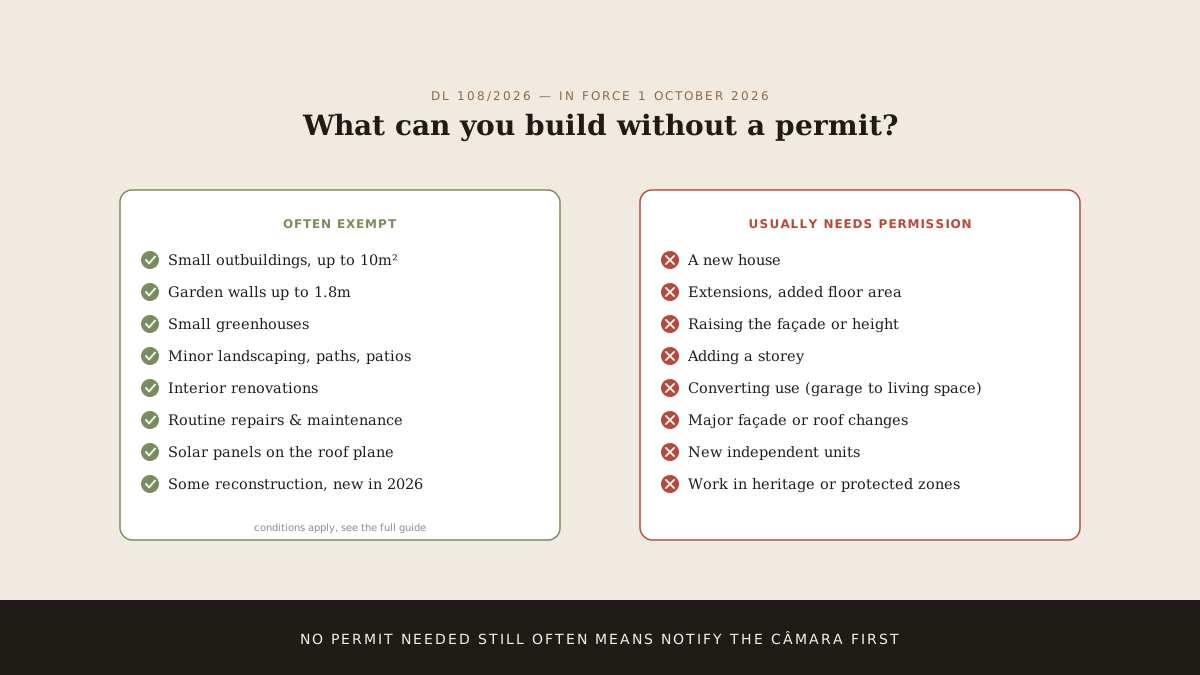
What's in this guide
- DL 108/2026 reforms which building work is exempt from a licence or comunicação prévia, but it doesn't take effect until 1 October 2026, postponed from an original August date
- Small outbuildings up to 10m², garden walls up to 1.8m, and small greenhouses can qualify as works of "limited urban significance" with no permit needed
- Interior renovations and routine repairs are generally exempt, but only if they leave the façade, height, and roofline unchanged
- Exempt does not mean unregulated: most exempt work still requires notifying the Câmara Municipal before starting, under Article 80.º-A
- Heritage zones, protected areas, and condominium buildings can all narrow or remove an exemption that would apply on an ordinary property
What Does "Exempt from Prior Control" Actually Mean?
The current legal basis is Decreto-Lei n.º 108/2026, of 29 May, which revises the Regime Jurídico da Urbanização e Edificação (RJUE), originally approved by DL 555/99. It's the most significant reform of Portugal's planning rules since DL 10/2024, and it was meant to take effect on 3 August 2026. That date was pushed back: DL 155-B/2026, published 31 July 2026, gave municipalities more time to adapt their systems and moved entry into force to 1 October 2026. As of this guide's last update, the reform is not yet in force.
Once it is, several categories of work will be treated as being of "limited urban significance," meaning small enough, and low-risk enough, that a full licensing process isn't required. That's a narrower thing than it sounds: the categories below come with specific size, height, and location limits, and your municipality can set additional conditions on top of the national baseline.
Which Small Structures Are Exempt From a Permit?
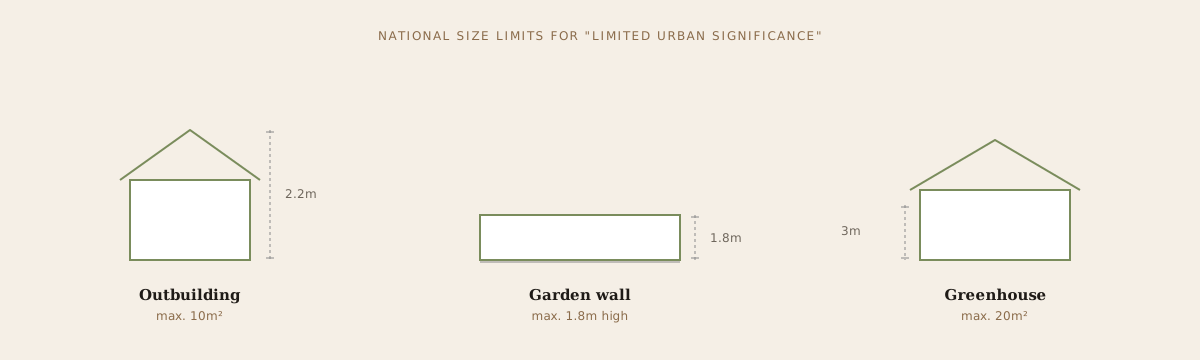
Max. outbuilding area
Max. outbuilding height
Max. boundary wall height
Max. greenhouse area
Outbuildings up to 10m²
A structure counts as limited urban significance when it has an area of no more than 10 square metres and is no higher than 2.2 metres, or the ground-floor height of the main building. It also can't border a public road. That could cover a garden shed, a small storage room, a compact workshop, a pump or equipment room, or a small garden office.
The exemption isn't automatic just because a prefab structure arrives without foundations. Portuguese planning law looks at whether the structure is permanently incorporated into the land, not how it was manufactured, and your municipality can add its own conditions on boundary distance, site coverage, or appearance.
Garden and retaining walls
Boundary or enclosure walls up to 1.8 metres can be exempt if they don't border a public road, and retaining walls up to 2 metres can be exempt if they don't significantly alter the existing topography. A wall facing a street is treated differently, and anything involving substantial excavation is worth a structural review given the drainage and stability risks.
Small greenhouses
A garden greenhouse can be exempt under 3 metres high and no larger than 20 square metres, aimed at modest domestic use rather than commercial agriculture. Larger structures, ones connected to utilities, or anything on protected rural land can fall under different rules entirely.
What Garden and Outdoor Work Doesn't Need a Permit?
Garden paths, minor paving, small patios, domestic landscaping, low-level decking, and garden steps generally fall outside the licensing requirement, provided the work stays within the property and doesn't touch public land. Where it gets less clear is anything that changes ground levels, drainage patterns, or the amount of impermeable surface. Extensive paving, excavation, land remodelling, and tree removal can all fall outside the exemption even when they look like ordinary garden work.
Leisure equipment tied to an existing house, children's play equipment, small sports installations, pergolas, barbecue areas, is exempt when its area is smaller than the main building, subject to municipal variation. Swimming pools are the one item on this list worth double-checking before you commit to anything: some municipalities treat smaller pools as limited urban significance, others require notification or technical documentation regardless of size. Check the local Regulamento Municipal de Urbanização e Edificação before ordering materials or excavating.
Which Interior Renovations and Repairs Are Exempt?
Kitchen and bathroom replacements, new flooring, plumbing or electrical work, replastering and painting, non-structural partition changes, and general modernisation can typically go ahead without a planning licence. The condition that matters is exterior appearance: the work can't create changes visible from outside that affect the building's façade, height, roof, or roofline.
The revised framework also allows exemptions for work affecting structural stability, but only when it's backed by a structural project and a signed declaration of responsibility from a qualified professional, not a contractor's opinion on site. Never remove a wall because someone believes it's non-load-bearing. Get a written assessment from an architect or structural engineer first.
Ordinary conservation work, repairing plaster, fixing leaks, replacing broken roof tiles, treating damp, repainting, repairing existing plumbing, is generally exempt too, since it maintains the building rather than changing its size, shape, use, or appearance. If a repair grows into an extension or a substantial reconstruction, that's a different category with different rules.
Does Installing Solar Panels or Efficient Windows Need a Permit?
Solar photovoltaic panels tied to an existing building are usually exempt if they don't extend beyond the roof area and don't project more than one metre above the building's height. The same applies to solar thermal collectors and some energy or water storage units, as long as the storage equipment stays concealed. Small wind turbines can qualify within legal height and rotor-size limits, but the municipality still needs to be notified before installation. None of this removes the electrical, grid-connection, or technical-certification requirements that apply regardless of planning permission.
Replacing windows can be exempt when the new frames improve energy efficiency while keeping the same opening geometry, the same frame proportions, and an exterior finish identical to the original. The same logic applies to roofing or cladding replaced with more efficient materials, as long as the finished appearance matches the original. Change the colour, size, or arrangement of windows and it stops being a simple replacement and starts being an exterior alteration. In an apartment building, windows, roofs, and façades are usually common areas, so condominium approval can be required even when the Câmara doesn't ask for one.
Is Reconstruction Work Exempt Under the New Rules?
This is one of the more significant changes DL 108/2026 makes. Reconstruction is tied to the property's last valid planning status and has to reproduce the building's formal composition, subject only to the limited changes necessary for safety and habitability. It's a real exemption, not a licence to rebuild without oversight: architectural, structural, seismic, and fire-safety projects can still be required depending on scope.
The line that matters is footprint and volume. Work that increases the footprint, construction area, façade height, or overall volume is treated as an extension, obra de ampliação, not reconstruction, and that puts it back under municipal control.
What Still Requires Planning Permission?
- ·Building a new house
- ·Constructing an extension
- ·Adding floor area or increasing the building's footprint
- ·Raising the façade or total building height
- ·Adding another storey
- ·Converting a garage, shop, or storage space to residential use
- ·Making significant changes to a façade or roof
- ·Creating new independent residential units
- ·Building a large garage or annex
- ·Major excavation or land remodelling
- ·Work affecting public land
- ·Demolition outside a specific legal exemption
Whether a specific project needs a licence, a comunicação prévia, a specialist authorisation, or something else depends on the property and the applicable planning instrument, which is exactly why a written assessment before signing anything is worth the cost.
Heritage properties and protected locations
The exemptions above are narrower, sometimes unavailable, for:
- ·Classified buildings
- ·Buildings in the process of being classified
- ·Properties within heritage protection zones
- ·Buildings forming part of classified groups or sites
- ·Properties in archaeological areas
- ·Coastal protection zones
- ·The Reserva Ecológica Nacional
- ·The Reserva Agrícola Nacional
A project that would be exempt on an ordinary property can require a heritage opinion or a separate authorisation in a protected location, and a modern apartment can sit inside the protection zone of a nearby monument without looking like it does. Don't judge this by the property's appearance alone.
Do You Still Need to Notify the Câmara Municipal?
The submission identifies the property, the owner or promoter, the contractor, the proposed dates, and the legal basis for the exemption, and a site notice may need to be displayed too. Skipping this step doesn't retroactively require a licence, but it can still create enforcement problems on its own, separate from whatever exemption applied to the work itself.
Before starting, it's worth confirming:
- ·The property's approved plans and last valid planning status
- ·The municipal planning plan and building regulations
- ·Whether the property is in a protected or restricted area
- ·Whether the work affects the structure, façade, roof, or permitted use
- ·Whether condominium approval is required
- ·Whether a commencement notification must be submitted
- ·Whether the contractor holds the appropriate IMPIC registration or alvará
For real certainty, request written confirmation from the municipality or have an architect prepare a planning assessment before you commit to anything.
Frequently Asked Questions
Conclusion
If a project changes a property's size, structure, exterior appearance, or permitted use, don't assume it's exempt, confirm the position before signing a contract, paying a deposit, or ordering materials. Rectifying unauthorised work can mean redesign costs, delays, fines, and in some cases removal of what was built, and it can complicate a future sale when the physical property no longer matches the approved municipal plans. A planning and technical review before construction is almost always cheaper than legalising the work afterward.
remodel.pt connects foreign property owners in Portugal with alvará-verified contractors, three written quotes, independent inspections, and staged payments.
Related reading: Do you need a permit to renovate in Portugal? · The 1951 rule · What is an alvará? · Portuguese renovation & real estate glossary

Pascal is the co-founder of remodel.pt. Originally from Switzerland, he has lived in Portugal for several years and has first-hand experience with the permit, VAT, and contractor issues property owners run into. He built remodel.pt to be the resource he wished existed when he started.